Industry

Real Estate • B2C • SaaS

Role

Lead Product Designer

Timeline

3 months • Nov 2023 - Jan 2024

Team

Myself, 1 PM (CEO), 4 Devs

ZipSmart.ai • B2C • 0 → 1
30%

reduced scope that changed the strategic framing

13%

increased paid subscriptions within 3 months after freemium launch

Problem Framing

Real estate is one of the most financially consequential decisions most people ever make. ZipSmart was built to change how buyers, sellers, investors, and renters navigate that decision — turning complex market data into reports people can actually act on.

The platform had paying users. The business model was working. But growth was stalling, and the reason was visible: the product experience wasn't earning the trust the data deserved. Three designers had tried and failed to close that gap. Each one missed what the CEO was actually building toward.

Arvin needed someone who could see the vision — and then pressure-test it.

Real estate is one of the most financially consequential decisions most people ever make. ZipSmart was built to change how buyers, sellers, investors, and renters navigate that decision — turning complex market data into reports people can actually act on.

The platform had paying users. The business model was working. But growth was stalling, and the reason was visible: the product experience wasn't earning the trust the data deserved. Three designers had tried and failed to close that gap. Each one missed what the CEO was actually building toward.

Arvin needed someone who could see the vision — and then pressure-test it.

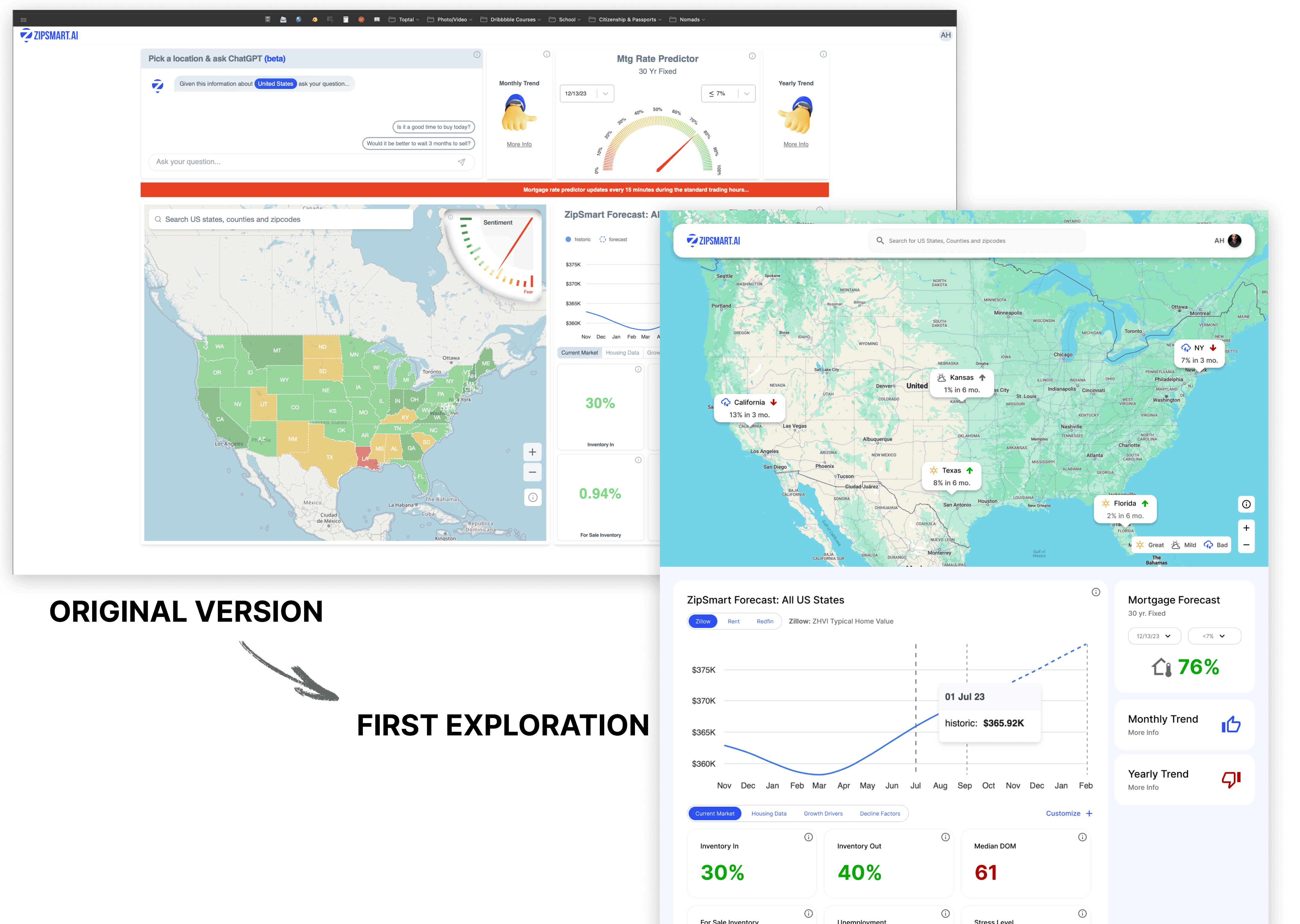
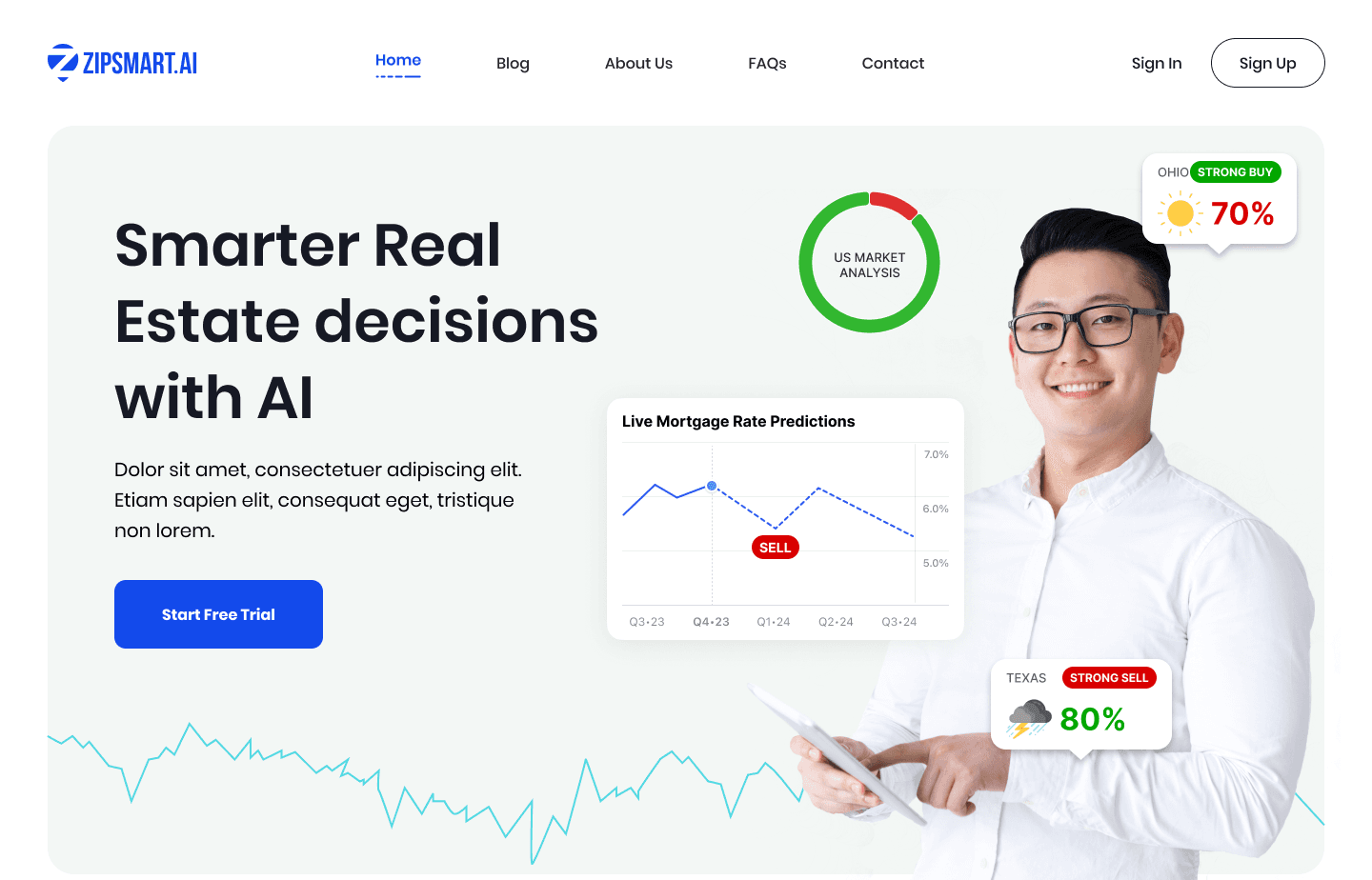
Existing product prior to redesign

The Business Problem

When I came in, the team wasn't just dealing with a UX problem. They were caught in a strategic deadlock.

The roadmap included a full marketing landing page alongside the core platform — which sounds reasonable until you ask the obvious question: what do you put on it? What features do you showcase when the platform itself isn't finished? What's the message that converts a visitor into a subscriber when you haven't validated what drives that conversion yet?

The team was spending real time and real money trying to answer a question they couldn't answer yet. The marketing website wasn't a communications problem — it was a symptom of building in the wrong order.

When I came in, the team wasn't just dealing with a UX problem. They were caught in a strategic deadlock.

The roadmap included a full marketing landing page alongside the core platform — which sounds reasonable until you ask the obvious question: what do you put on it? What features do you showcase when the platform itself isn't finished? What's the message that converts a visitor into a subscriber when you haven't validated what drives that conversion yet?

The team was spending real time and real money trying to answer a question they couldn't answer yet. The marketing website wasn't a communications problem — it was a symptom of building in the wrong order.

Personas

man standing beside wall

Marcus Thompson

Marcus Thompson

Real Estate Agent, 38

Real Estate Agent, 38

Real Estate Agent

Real Estate Agent

Chicago, IL

Chicago, IL

12 yrs experience

12 yrs experience

Goal

Access market data quickly to advise clients confidently and close deals faster — without spending hours aggregating from multiple sources.

Access market data quickly to advise clients confidently and close deals faster — without spending hours aggregating from multiple sources.

Pain Points

  • Data is scattered across too many tools

  • Clients expect instant, accurate answers

  • Hard to justify pricing recommendations without clear data

"What's the market doing in this zip code right now, and what should I tell my client?"

Data Literacy

High

High

woman on focus photography

Priya Nair

Priya Nair

First-time Home Buyer, 31

First-time Home Buyer, 31

Home Buyer

Home Buyer

Austin, TX

Austin, TX

First Purchase

First Purchase

Goal

Understand whether now is a good time to buy and which neighborhoods make sense — without feeling overwhelmed by conflicting information.

Understand whether now is a good time to buy and which neighborhoods make sense — without feeling overwhelmed by conflicting information.

Pain Points

  • Too much conflicting data online

  • Unsure what metrics actually matter

  • Anxious about making the wrong financial decision

"Is this neighborhood a smart investment for me, or should I keep looking?"

Data Literacy

Low-Med

Low-Med

smiling woman wearing turban

Denise Okafor

Denise Okafor

Home Seller, 54

Home Seller, 54

Home Seller

Home Seller

Atlanta, GA

Atlanta, GA

Downsizing

Downsizing

Goal

Price her home competitively and time the sale well — needing clear market signals rather than raw data to overcome emotional attachment to the property.

Price her home competitively and time the sale well — needing clear market signals rather than raw data to overcome emotional attachment to the property.

Pain Points

  • Emotional bias makes pricing decisions harder

  • Unsure when the right moment to list is

  • Doesn't trust agent estimates without data to back them up

"Is this the right time to sell, and what price will actually move my home?"

Data Literacy
Low-Med

Low-Med

Working session with CEO to validate wireframe direction and align on scope

Original version vs. first exploration
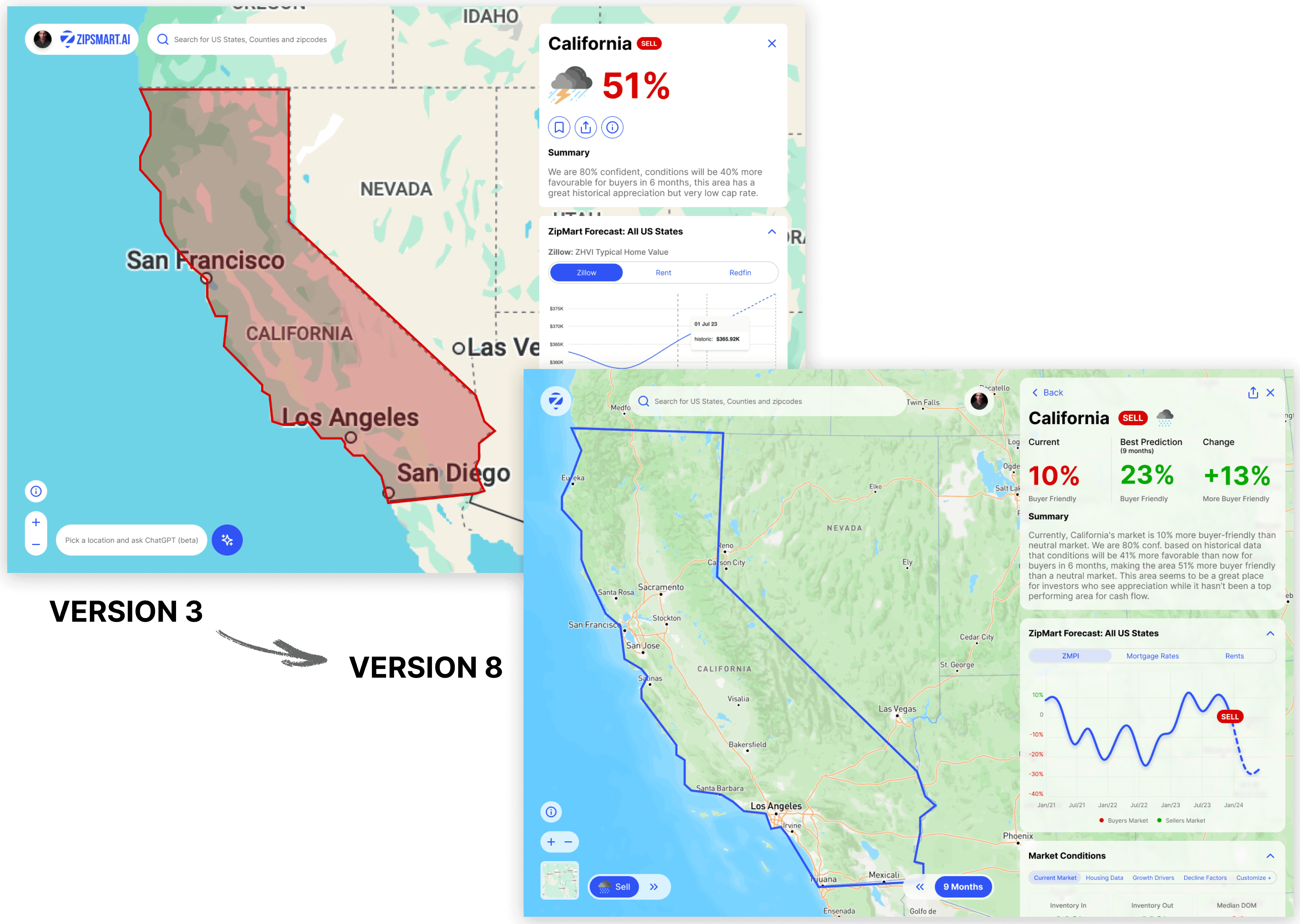
Different approaches for the side panel, charts, and map visualization

Version 2

Exploration for the charts and data visualization

The Strategic Call

Before touching a single screen, I spent time with Arvin understanding the business — not just the product brief. What I found was that the landing page wasn't the path to more paid subscribers. The product was.

My recommendation: cut the marketing site entirely. Launch freemium instead. Let users get inside the platform, experience the value directly, and convert on their own terms. Build the conversion path into the product — not in front of it.

That single decision reduced scope by 30%. It unblocked the team, clarified the narrative, and changed the entire framing of the launch.

Before touching a single screen, I spent time with Arvin understanding the business — not just the product brief. What I found was that the landing page wasn't the path to more paid subscribers. The product was.

My recommendation: cut the marketing site entirely. Launch freemium instead. Let users get inside the platform, experience the value directly, and convert on their own terms. Build the conversion path into the product — not in front of it.

That single decision reduced scope by 30%. It unblocked the team, clarified the narrative, and changed the entire framing of the launch.

Instead of "how do we explain ZipSmart", the question became "how do we make ZipSmart undeniable"
That's a much better design problem.

That's a much better design problem.

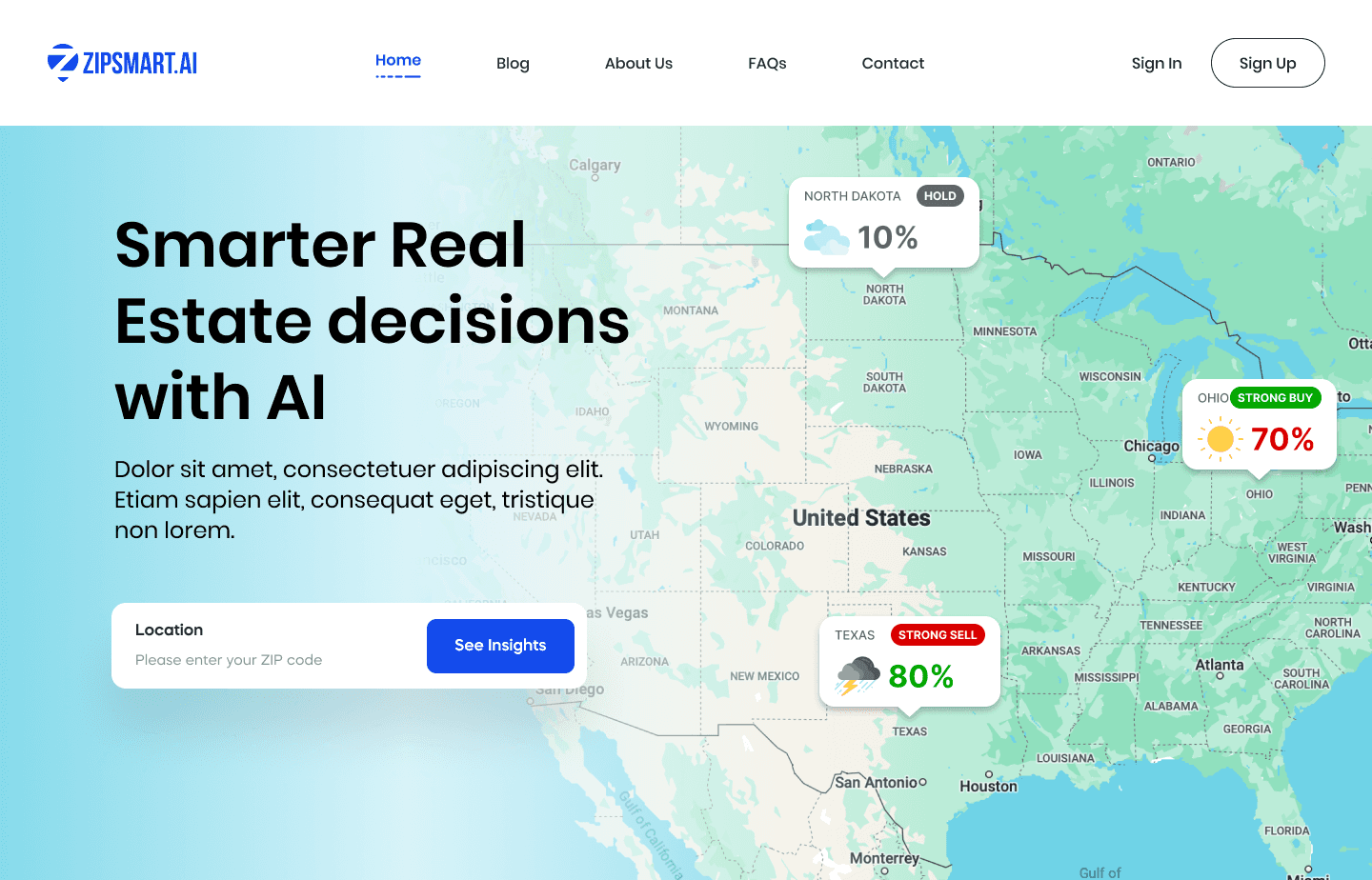
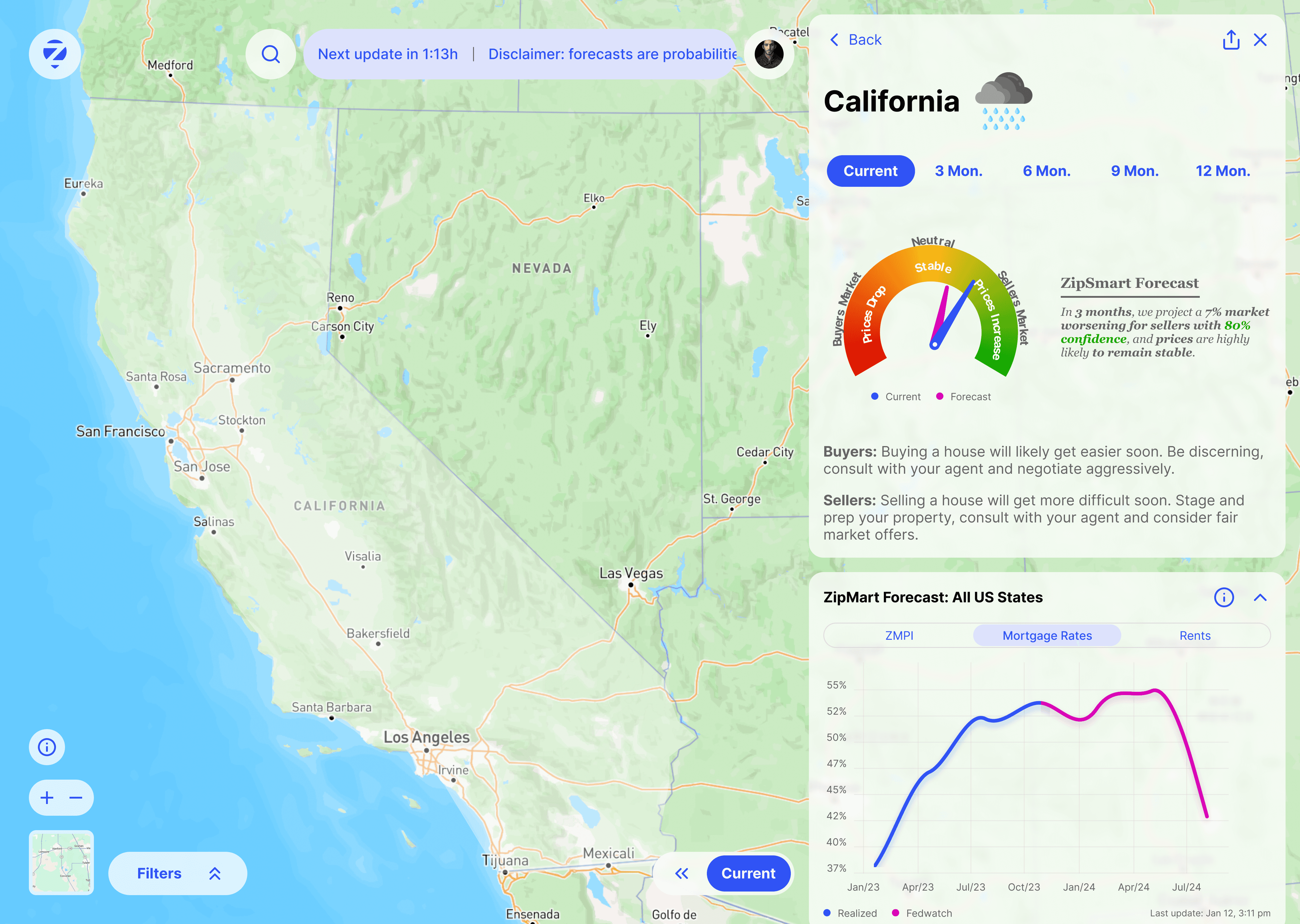
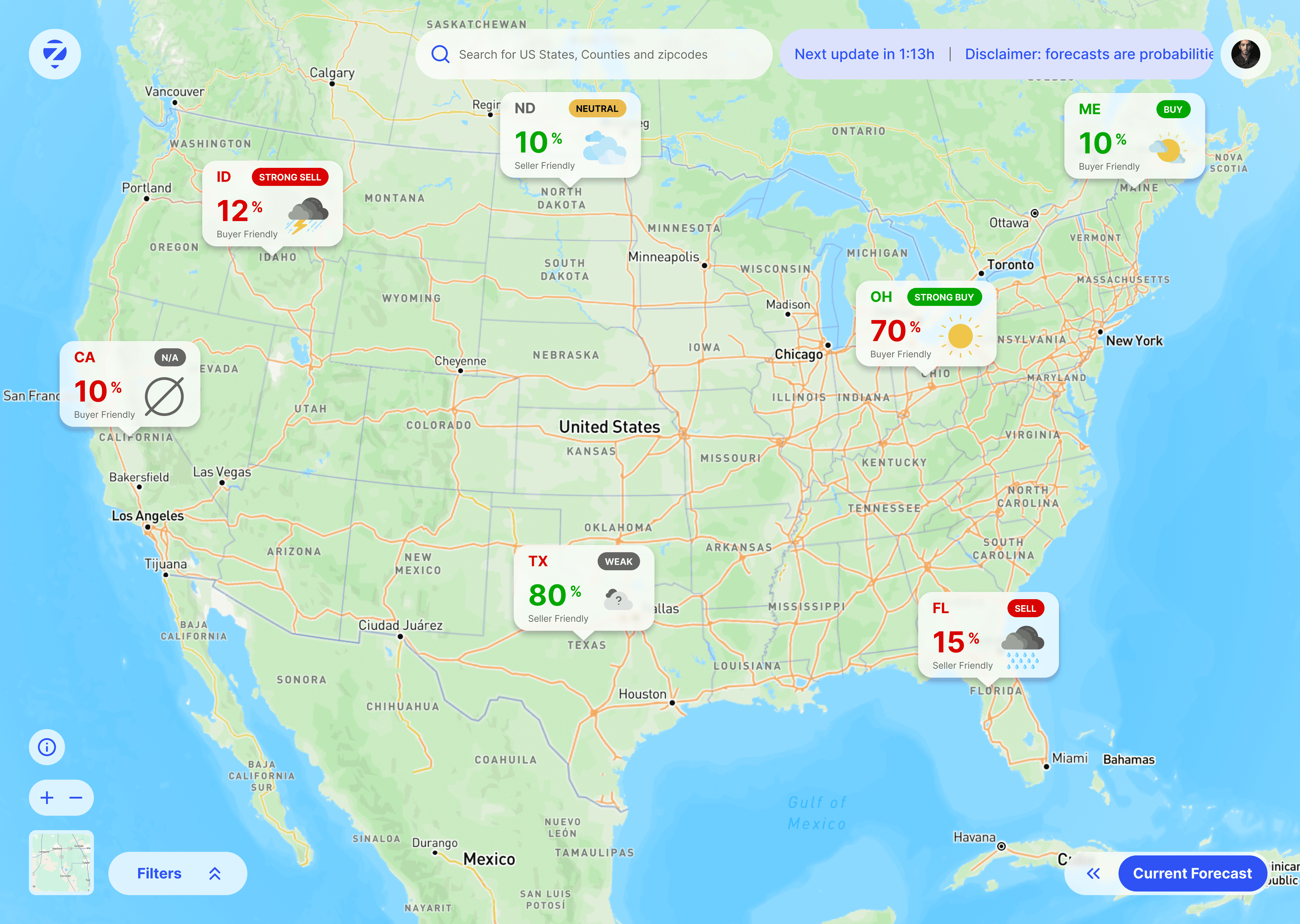
Defined visual approach, with the market signals as weather forecast

Design Approach

With scope locked and the freemium model confirmed, every design decision had a clear job: convert free users into paid subscribers without friction or pressure.

Three principles drove the work:

With scope locked and the freemium model confirmed, every design decision had a clear job: convert free users into paid subscribers without friction or pressure.

Three principles drove the work:

Progressive disclosure as the conversion engine.

Free users access state-level data — enough to prove the platform's value and build trust. Paid subscribers unlock city, zip code, and county-level insights. The tier boundary isn't a wall. It's the moment a user realizes they want more.

Free users access state-level data — enough to prove the platform's value and build trust. Paid subscribers unlock city, zip code, and county-level insights. The tier boundary isn't a wall. It's the moment a user realizes they want more.

Data visualization as a decision tool, not a display.

Every chart, map, and table was designed to answer a specific user question — not just to show that data exists. The interactive map became the platform's anchor: familiar, fast, and built to surface the insight users came for.

Every chart, map, and table was designed to answer a specific user question — not just to show that data exists. The interactive map became the platform's anchor: familiar, fast, and built to surface the insight users came for.

Visual credibility as a business asset.

In real estate, trust is the product. The aesthetic needed to signal authority — clean, restrained, consistent — without intimidating the first-time buyer sitting next to the seasoned investor.

In real estate, trust is the product. The aesthetic needed to signal authority — clean, restrained, consistent — without intimidating the first-time buyer sitting next to the seasoned investor.

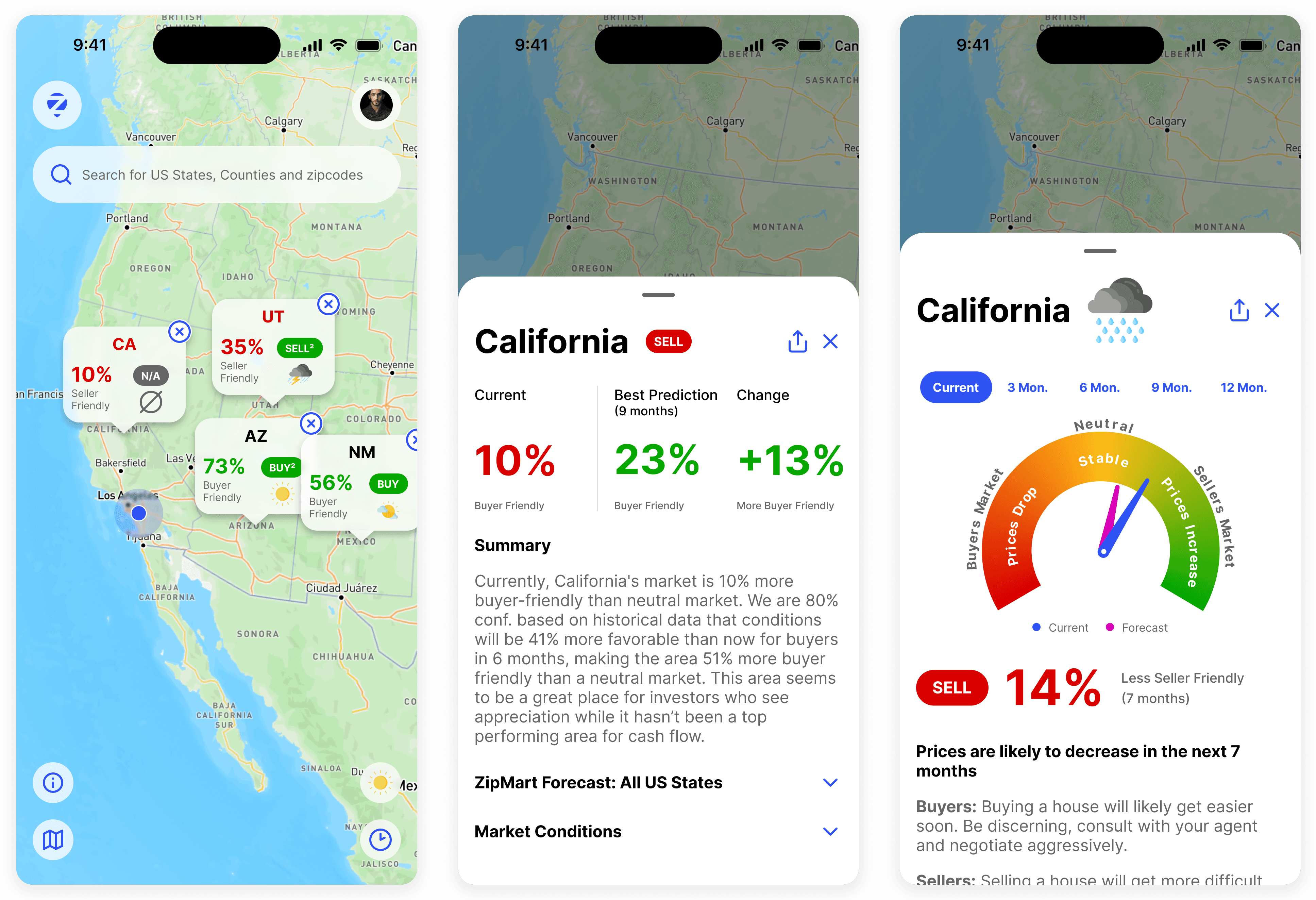
Selected state with its data panel. Mimicking GoogleMaps panels to create a lower learning curve
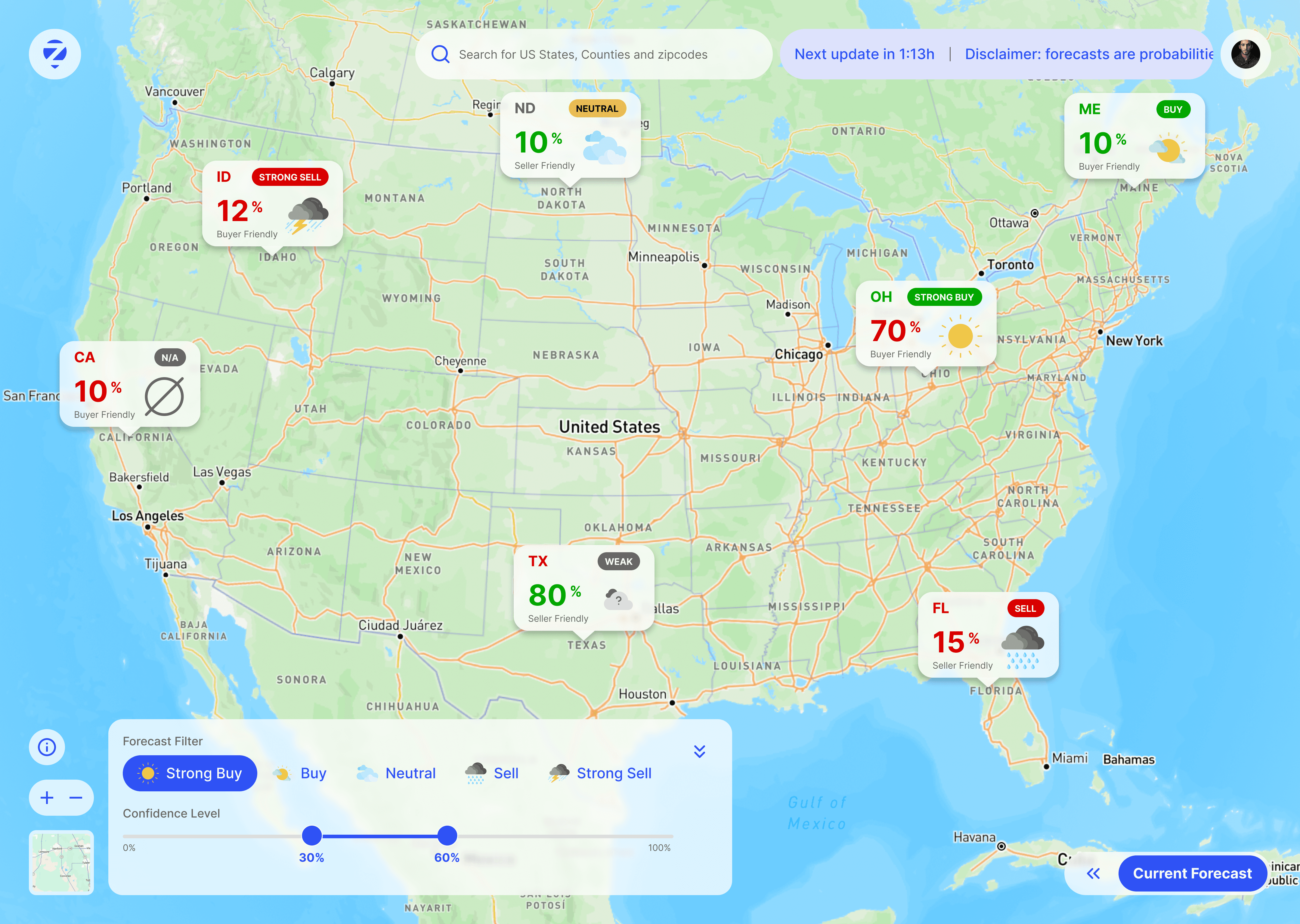
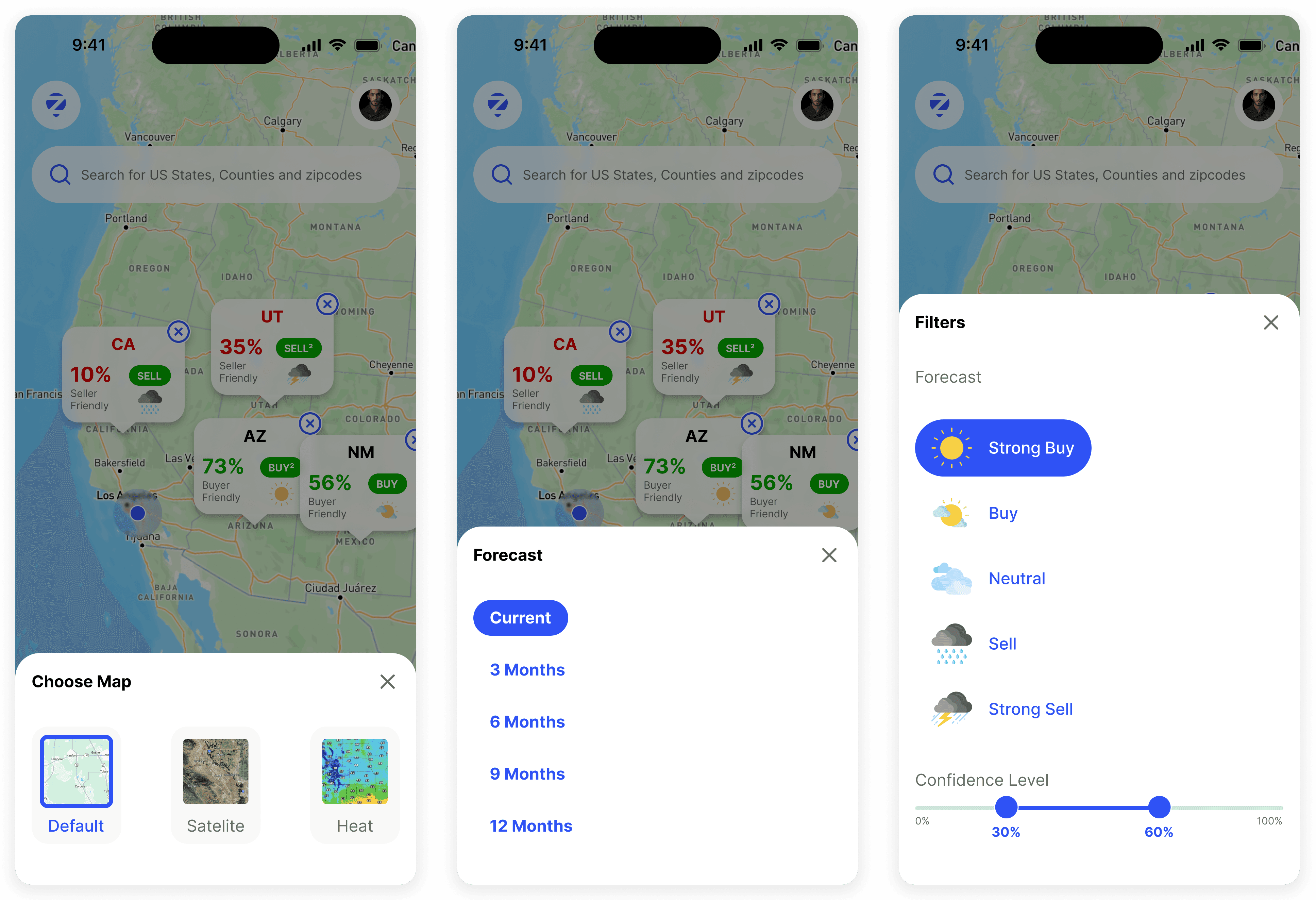
Filters, changing the forecast, changing map visualization with floating panels

Solution

The final product addressed all four personas through a single, cohesive experience:

The final product addressed all four personas through a single, cohesive experience:

  • State, city, zip code, and county-level market data with tiered access

  • Actionable reports tailored to four user personas — buyers, sellers, investors, and renters

  • A flexible profile system that adapts the experience based on user type

  • Mobile-optimized layouts ensuring consistency across devices

  • A freemium conversion model built directly into the product flow

  • State, city, zip code, and county-level market data with tiered access

  • Actionable reports tailored to four user personas — buyers, sellers, investors, and renters

  • A flexible profile system that adapts the experience based on user type

  • Mobile-optimized layouts ensuring consistency across devices

  • A freemium conversion model built directly into the product flow

Mobile and responsive variations of the SaaS solution

Impact

The MVP launched on schedule. The scope reduction meant the team shipped something focused and polished instead of overextended and half-finished.

Within three months, the freemium model drove a 13% increase in paid subscriptions — direct validation that letting the product sell itself was the right call. The interface became a core asset in ZipSmart's seed funding round, with investors responding to the clarity and professionalism of the experience. No major UI revisions were required post-launch.

"The genius behind the ZipSmart interface." 

Arvin Haddad, CEO, ZipSmart.ai